
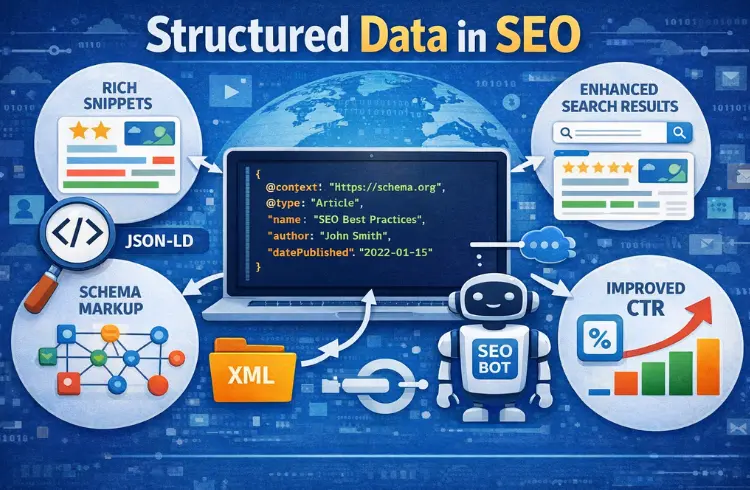
If you’ve ever searched for a recipe, checked a flight status, or looked up a local business hour directly on Google, you’ve experienced the power of Structured Data without even realizing it.
For years, SEO was primarily about keywords and backlinks. Today, search engines are far more sophisticated. They don’t just read your content; they want to understand it. Structured Data is the bridge between your website and the search engine’s understanding.
What is Structured Data?
Think of your website as a library and Google as the librarian. Without a cataloging system, the librarian has to read every book to know what’s inside. Structured Data is the catalog card for your web page.
Technically, it is a standardized format (usually written in JSON-LD) that provides specific information about a page and classifies the page content. It tells search engines exactly what the data on your page means – not just what it says.
Why It Matters for SEO
While Structured Data isn’t a direct ranking factor (adding it won’t automatically push you to position #1), it is essential for visibility.
Here is the primary benefit: Rich Results
Standard search results show a blue link, a green URL, and a snippet of text. Rich results enhance this format. Depending on your content type, structured data can help you earn:
- Recipe Cards: With images, ratings, and cooking time.
- Event Listings: Dates, locations, and ticket prices.
- FAQs: Directly answering questions in the SERP.
- Product Carousels: Price, availability, and star ratings.
These enhanced listings take up more visual real estate on the search results page, significantly increasing your Click-Through Rate (CTR).
Common Types of Structured Data
You don’t need to mark up every page on your site. Focus on the types that match your content:
- Articles: For blog posts and news (Headlines, images, dates).
- Local Business: For physical locations (NAP, hours, geo-coordinates).
- Products: For e-commerce (Price, stock status, reviews).
- Events: For webinars, concerts, or conferences.
- FAQ & How-To: For instructional content.
How to Implement Structured Data
Implementing structured data is easier than it sounds, especially with modern tools.
1. Use Schema.org Vocabulary: This is the universal language search engines understand.
2. Choose Your Format: Google recommends JSON-LD, which is inserted into the <head> section of your HTML or via a script tag in the body.
3. Leverage Tools: You don’t need to code from scratch.
- Plugins: If you use WordPress, plugins like RankMath or Yoast automate much of this.
- Generators: Use tools like Merkle’s Schema Markup Generator to create the code manually.
4. Test It: Always validate your markup using Google’s Rich Results Test tool before publishing. This ensures Google can read it without errors.
The Bottom Line
Structured Data is no longer just for technical SEO experts; it is a fundamental best practice for anyone who wants their content to stand out. By speaking the language of search engines, you make it easier for Google to serve your content to the right users at the right time.
